


What’s the Difference Between -6AN and -8AN Fittings?
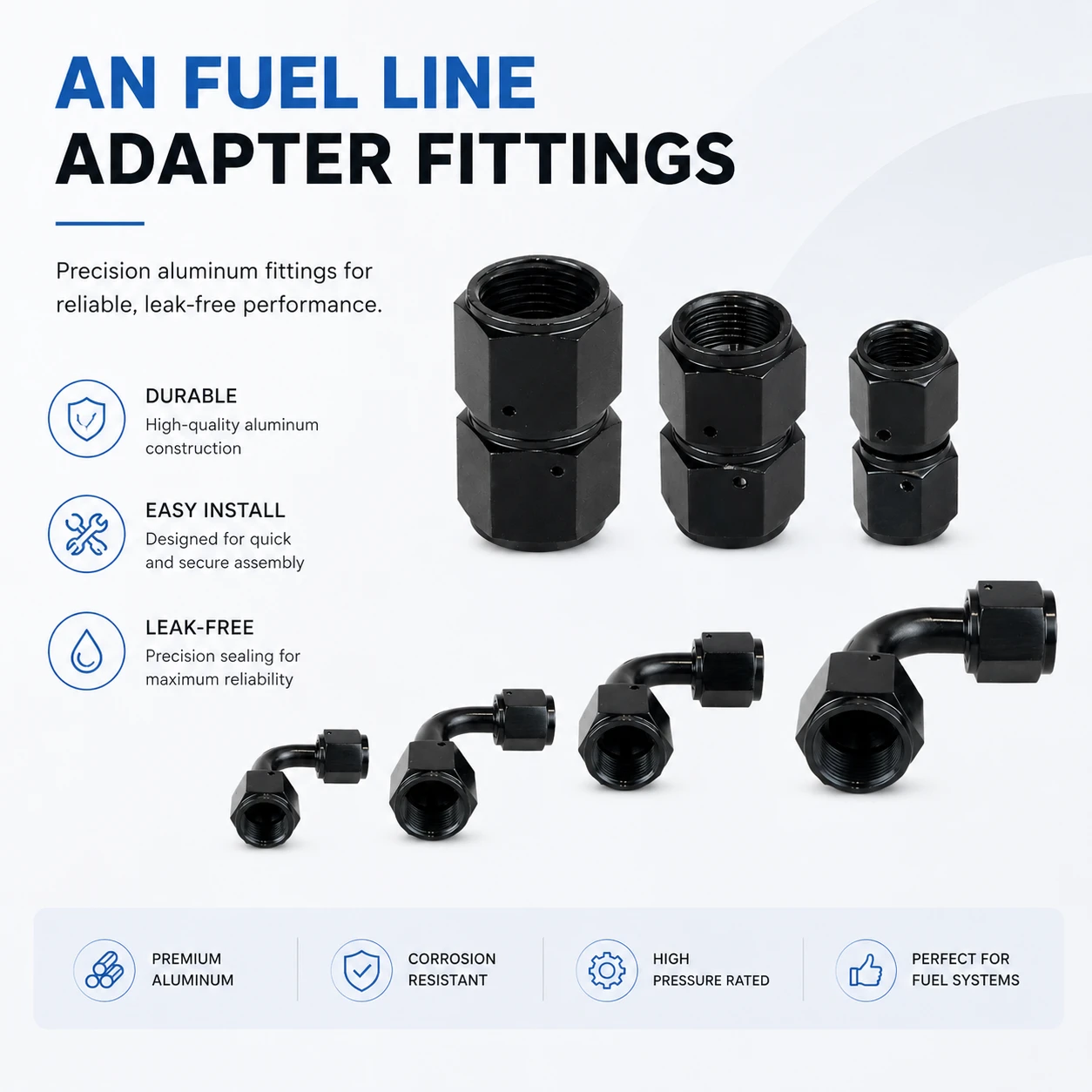
The biggest difference between -6AN and -8AN fittings is not just size — it’s flow capacity, horsepower support, and installation space. Many people struggle with this when upgrading fuel systems, but it can actually be simplified:
Item | -6AN | -8AN |
|---|---|---|
Approx. Inner Diameter | 8.7–9mm | 11–12mm |
Closest Imperial Size | 3/8" | 1/2" |
Flow Capacity | Moderate | Higher |
Typical Horsepower Range | Around 300–600HP (depends on fuel type) | 500–1000HP+ |
Installation Space | Smaller, easier routing | Takes up more space |
Cost | Lower | Higher |
Common Applications | Fuel rails, FPRs, return lines | High-flow feed lines, dual pump systems |
When Should You Choose -6AN?
-6AN is usually the right choice if you have:
* Street car builds
* Single fuel pump systems
* Regular gasoline setups
* Power goals around 300–500HP
* Limited engine bay space
For many modified street cars, single turbo setups, and standard EFI systems, -6AN is already sufficient.
When Should You Choose -8AN?
Upgrading to -8AN is recommended if you have:
* Power goals above 500HP
* E85 fuel systems
* Dual fuel pump setups
* High boost applications
* Future upgrade plans
Because E85 requires significantly more fuel volume, many 500HP E85 builds move directly to -8AN even if the horsepower level itself isn’t extreme.
Why Do People Say “Bigger Is Better”?
Not exactly.
Larger fittings provide:
Advantages:
* More flow headroom
* Lower pressure drop
* Easier future upgrades
Disadvantages:
* More expensive
* Heavier
* Harder to route
* Takes up more space
One common mistake is running full -10AN lines on a 400HP street car.
That’s often overkill.
Quick Sizing Recommendations
Street Cars / Under 400HP:
→ -6AN is usually enough
500–700HP / E85 / Turbo Builds:
→ -8AN is recommended
800HP+ / Dual Pumps / Race Cars:
→ Consider -10AN
-6AN works best for moderate horsepower builds, tighter engine bays, and typical street setups.
-8AN is better suited for higher fuel demand, bigger horsepower goals, and future expansion.
Many fuel system issues are not caused by fittings being too small, but by mismatched components such as pumps, fuel rails, regulators, and hose sizes. When choosing fitting sizes, always consider the fuel system as a whole.

 Chat with us