


Why Are My AN Fittings Leaking?
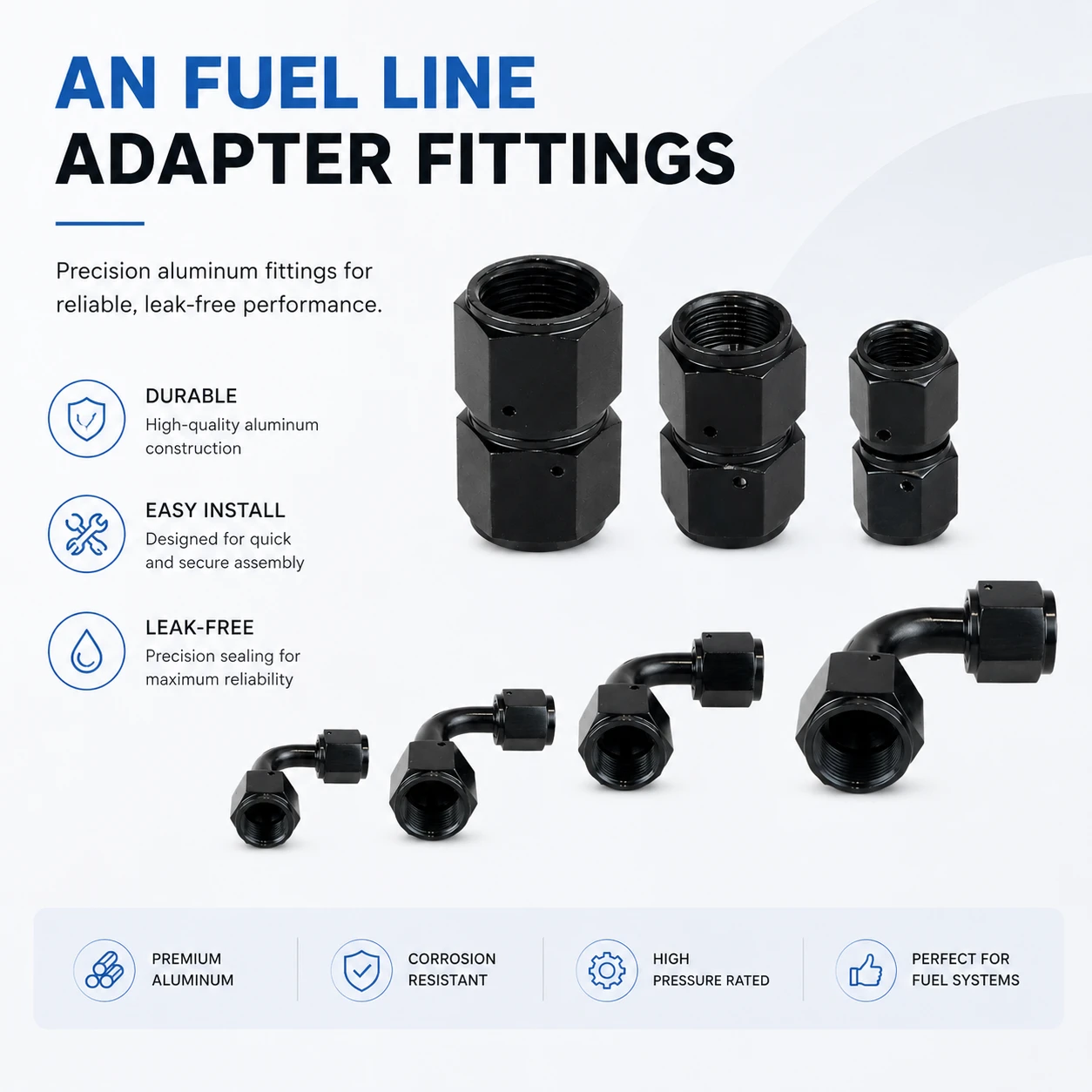
Few things are more frustrating than finishing a fuel system install, turning the key, and immediately finding fuel dripping from your AN fittings.
The good news is this: **most leaking AN fittings are caused by installation mistakes or mismatched components—not defective parts.**
If your fittings are leaking, here are the most common reasons.
1. Overtightening the Fittings
Many people assume tighter means better.
Actually, AN fittings seal using the 37-degree flare surface, not by crushing threads together. Over-tightening can damage the sealing surface, deform the flare, and create leaks.
If the fitting feels extremely tight and still leaks, tightening more usually makes things worse.
2. Mixing Different Standards
One common mistake is mixing AN fittings with other thread standards.
For example:
AN flare fittings
NPT threads
BSP threads
Metric fittings
Some threads may screw together but still fail to seal properly.
Always verify thread type before installation.
3. Damaged Flare Surfaces
AN fittings rely on clean mating surfaces.
Small scratches, dents, or machining defects on the flare surface can easily create leaks under pressure.
Inspect both sides carefully before assembly.
4. Incorrect Hose Assembly
If you use reusable hose ends, hose installation matters.
Common problems include:
* Hose not fully inserted
* Braided lines fraying internally
* Crooked cuts
* Uneven assembly
Even small assembly mistakes can cause leaks.
5. Using Sealant Where It Doesn’t Belong
This causes more problems than many people realize.
AN flare connections generally **do not require thread sealant or Teflon tape** because the threads themselves are not the sealing surface.
Adding excessive sealant may interfere with proper seating.
6. Poor Quality Fittings
Cheap fittings sometimes have inconsistent dimensions, poor machining, or rough sealing surfaces.
Low-quality fittings may seal once but develop leaks after heat cycles and vibration.
How to Fix Leaking AN Fittings
Try these basic checks:
* Confirm thread compatibility
* Inspect flare surfaces
* Reassemble hose ends carefully
* Replace damaged fittings
* Avoid overtightening
* Pressure test before driving
Most AN fitting leaks come from installation issues rather than the fitting design itself.
Taking extra time to verify thread type, flare condition, and assembly quality usually solves the problem faster than simply tightening everything harder.
When dealing with fuel systems, fixing small leaks early is always safer than ignoring them.

 Chat with us